
Logo

Home
About MITS
Professional Development
Summer Institutes
Publications
Resources
MITS Opportunities

MITS

Museum Institute for Teaching Science

MITS promotes high quality, inquiry-based, hands-on science education and STEM educational initiatives through collaborations of informal education institutions (museums, aquarium, nature centers and other non-profit organizations) and formal education institutions (colleges, universities, and
K-12 schools).

MITS provides programs to enhance inquiry-based, hands-on teaching of STEM:

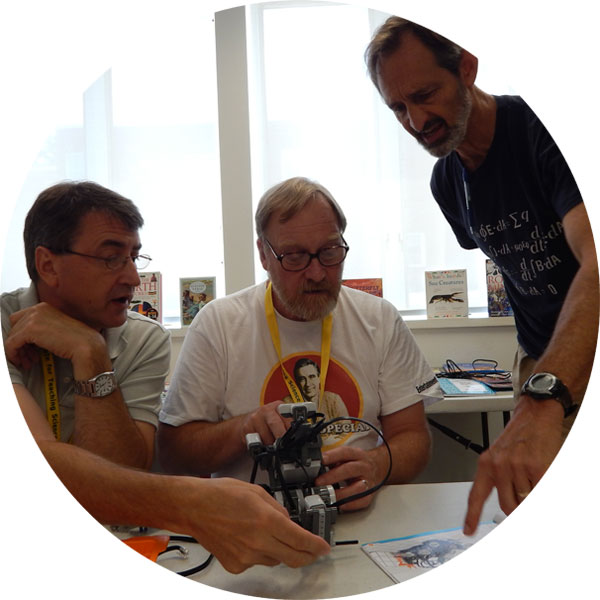
Teachers at the Summer Institute
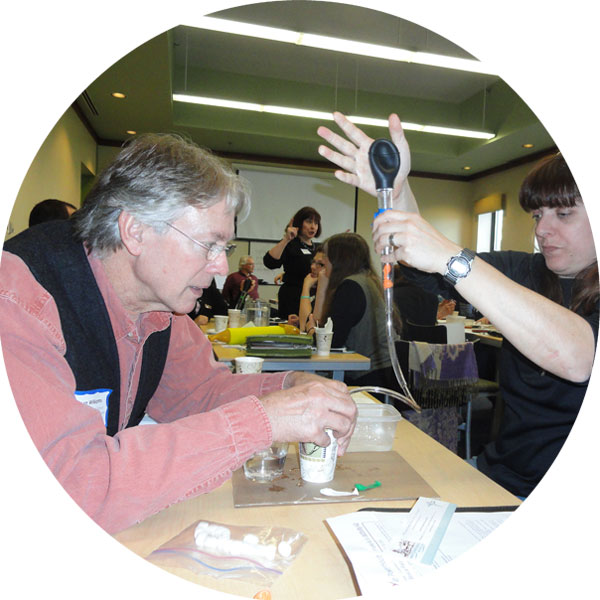
Professional Development Seminars
SeaPerch Workshop

Why is inquiry-based instruction important?

Inquiry-based instruction allows students to develop knowledge and understanding of scientific ideas through directed, guided, and open-ended activities.  This has been shown to be the most effective approach to learning STEM subjects by helping students become more engaged in activities. Inquiry-based learning allows students to ask questions, observe, discover, interpret, and theorize.  Students are able to grasp a better understanding and have better retention of the principles being taught. The following are key points to the benefits of inquiry-based instruction.

1)  Inquiry-based teaching allows students, most of whom have differentiated learning abilities, a variety of ways to show what they have learned through oral reports, diagrams, charts, etc. more clearly than a standardized test.  It is an excellent method of teaching all children. 

2)  Through inquiry-based learning, skills are developed that have inter-disciplinary benefits.  Students develop better reading, writing, and communication skills through the process of sharing ideas, observations, and findings.  The use of data collection and analysis from the inquiry process strengthens students’ mathematical skills.

3)  When science is taught as a process as well as with content, students learn how concepts and facts relate to each other.  As they observe, collect data, interpret, and explain possible sources of error in their results, they are developing critical thinking skills.  This allows children to be independent thinkers and question information in the world around them.

4)  Lastly, the process of open-inquiry contributes to the ability of students to make informed choices in their lives.  As students are taught concepts, they create explanations (hypotheses), make predictions, observe, and conclude.  They learn from the outcome of their choices. 


Find us on Facebook!


MITS, Inc. (Museum Institute for Teaching Science)
1354 Hancock St. Ste. 302
Quincy, MA 02169
Tel. 617-328-1515 Fax. 617-328-1516
mits@mits.org